
County Budget Questioned
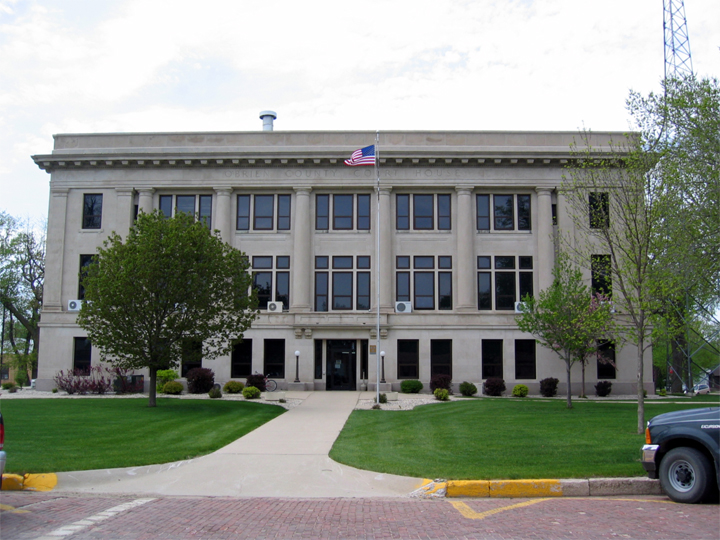
A public hearing prior to the adoption of the O’Brien County’s proposed 2022-23 fiscal year budget was held Tuesday march 29. Scott Engelke of rural Sutherland attended and questioned the numbers.
Reaching a final property tax bill for any property for any governing body is the culmination of a lot of moving parts. Property assessments are one part. Rollbacks affect just how much value can be taxed. Requests from tax-supported entities are another. Bringing those moving parts together allows the necessary levy to be set for each taxing agency. And there are many taxing agencies from property taxes: school districts, community college, extension, special assessment districts, assessor and county. There may be more.
Each county has an assessor’s office. A Conference Board consisting of the mayor from each community, a school board member from each school district and two supervisors oversees the office. An assessment is the study of many factors including recent sales of comparable property, condition, square footage, use, out buildings for agriculture lands, productivity and more. After all of the myriad of variables are determined and measured, or assessed, a value is placed on a parcel or structure. Procedures to question a valuation do exist and must be completed (this year) by April 30.
While the assessment part of a tax bill is being determined, completely separate from budgeting or setting a levy, departments are looking into a crystal ball and guessing at what their needs will be for the coming fiscal year. It’s notable at this point that the requested funding amount will be based on the prior year’s assessment. Property taxes are paid two years behind the calendar.
Each levy has a maximum limit placed by law. Each levy is charged to a property per $1000 of value to the property. So for revenue to remain the same and property values rise, a levy can then fall, theoretically keeping the tax dollars the same. Or a valuation can fall, but to keep the revenue stable, the levy would have to be increased.
Engelke questioned why, in the face of rising property tax values tax bills are not falling and perhaps increasing. The short answer is part rising values. And rising budget requests.
Compensation is the biggest expense to most governing bodies. The county supervisors set salaries for elected officials. A compensation board examines the state’s salaries for elected officials and work to compare apples to apples – officials and employees of like-sized counties. The compensation board also must incorporate factors required by law into determining a maximum wage increase for elected officials. The supervisors then have the duty to discuss and set new salaries. Wages are stated as a percentage of an elected official’s salary.
The compensation board set increases as high as 8% for county elected officials this year, largely due to the threat of wild inflation and fear of losing any employees. The sheriff’s salary had a special case caused by state law. A sheriff’s wage review now had to consider the salaries of prison wardens. The sheriff’s salary was increased by 14%. The supervisors voted to give those maximum raises. The result is an increased county budget.
Not all levies rose. Specific levy revenue can only be used to pay for specific costs. The general fund levy, like in the current budget, is applied at its maximum allowable $3.50 per $1000 of property value (after any applicable rollbacks). By law, when the maximum general levy does not fully fund requirements the county can apply a general supplemental levy. This year that levy is set at $.12352 per $1000. The rural services levy (applied to only rural property) and funds secondary roads, EMS and libraries fell to $2.91 per $1000.
Total property taxes levied for the 2022-23 fiscal year is $6.53696 per $1000 generating $7,633,483 from property taxes to the general fund, general supplemental fund and the rural services fund. The current budget is $6,902,416 (amended).
These figures represent only the county’s property tax. This is a very short description of how property tax is determined.