
“Charlie” the Armadillo
By Mari Radkte
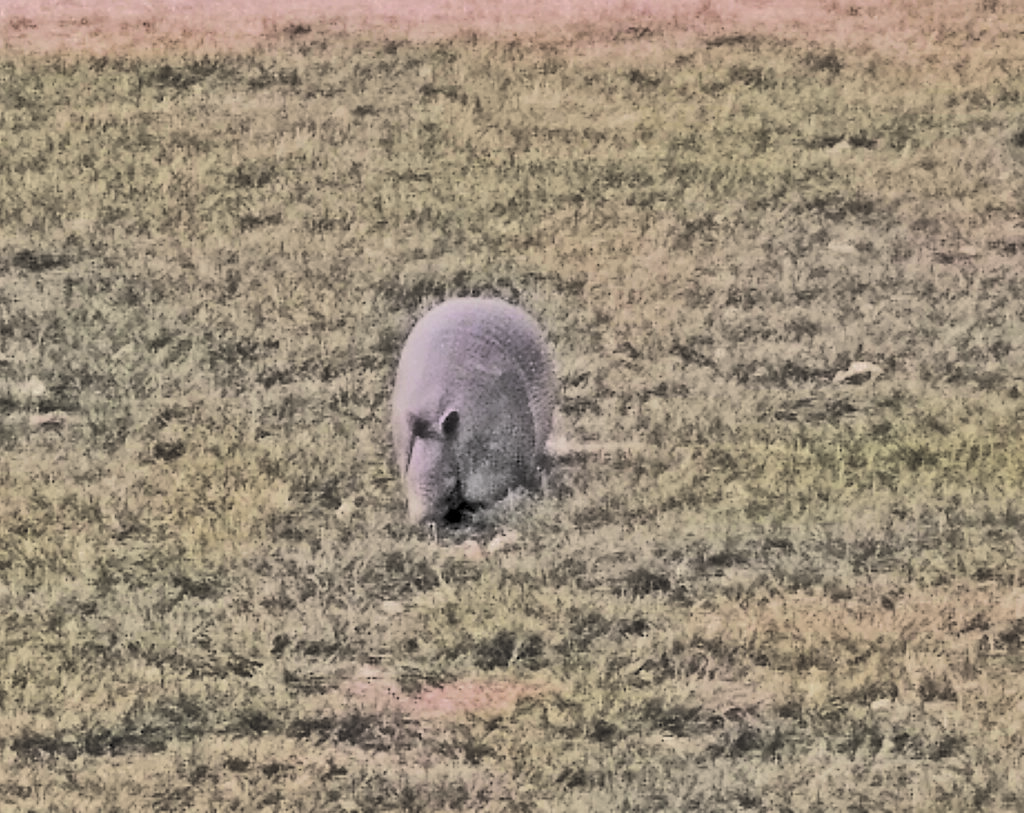
A visitor surprised Rich and Neetie Frerk on Monday December 20. To get critter guests when you live outside of town is not unusual. But Charlie came as a real surprise. Charlie, an armadillo rooted around the yard and found apparently sufficient sleeping digs in the groves and water from the nearby stream quite inviting. Charlie made himself at home southwest of Paullina.
Armadillos are not a protected species. Through time there are many subspecies of armadillo (Spanish for “little armored ones”) and an assortment of names for the armor shelled creatures. Many of the species of armadillos have gone extinct.
Native to South America, geographic changes in Central America have allowed their northward migration. Two species are found readily in Central America and have made it to the southern parts of North America including Texas, Florida and North Carolina. A lack of natural predators have allowed a few to migrate as far north as southern Nebraska and Indiana. There have been 20 verified sightings of hard-shelled rodent during 2021 in Iowa, mainly southeast.
Armadillos are mostly small. There are very small and very large armadillos. Most, and including Charlie, measure approximately 30 inches in length (including tail). They have long sharp claws to dig. The digging provides access to food and a way to build shelter. They eat mostly insects, grubs and invertebrates.
Charlie’s short legs can carry him quickly. He is mostly covered with a series of plates made from overlapping dermal bone. Armadillos have very little body fat and have a low body temperature, making cold weather a hostile living environment for them. They are considered prolific at reproduction with some species always giving birth to 4 identical offspring.
Charlie is good entertainment when he is out rooting around for food. He is often seen by the Frerks outside their bay window. The dog barks, but Charlie is unphased. You can watch a busy Charlie on an unseasonally beautiful day on our YouTube Channel, Belltimescourier.
Wait, armadillos in Iowa? Yes, you may get a glimpse of one of these unique critters in our state from time to time. If you do, send a report our way, as we’d like to document their location in the state. In the meantime, did you know these interesting facts?
Not just Texas – You may think first of Texas when you hear “armadillo” – it’s the Texas state (small) mammal, after all – but the nine-banded armadillo is just one of 20 armadillo species worldwide. The nine-banded armadillo ranges from Argentina and Uruguay to the United States. They’ve been expanding northward from Texas and Mexico for more than 100 years.
High jump – Sure, they have those handy armored plates to help protect them, but armadillos can also jump 3 to 4 feet straight up in the air to avoid or scare predators. However, this trait often leads to their demise on roadsides, where they jump to avoid the predator (vehicle), but end up crashing into the underside of the vehicle instead.
Little ones – Loosely translated, “armadillo” means “little armored one” in Spanish, and it’s fitting for their young. Armadillos always give birth to identical quadruplets!
Down under – Their armor may steal the show, but these little mammals have impressive claws, which they use to burrow underground. But they don’t just stick to land – armadillos can walk underwater and hold their breath for up to six minutes!
Light snack – Insects are the cuisine of choice for the mostly nocturnal, semi-toothless armadillo. These small critters, which average about 12 pounds and 30 inches, have poor sight but an outstanding sense of smell.
Snowbirds – While armadillos may make their way into Iowa now and then, they’re not likely to survive our cold and harsh winters.
See one?
Send your first-hand sighting reports, including specific location details and photos if available, as well as your contact information to James.Coffey@dnr.iowa.gov so that we can track armadillo sightings in Iowa.